
Women’s Fashion During World War I: The Decade That Changed Everything

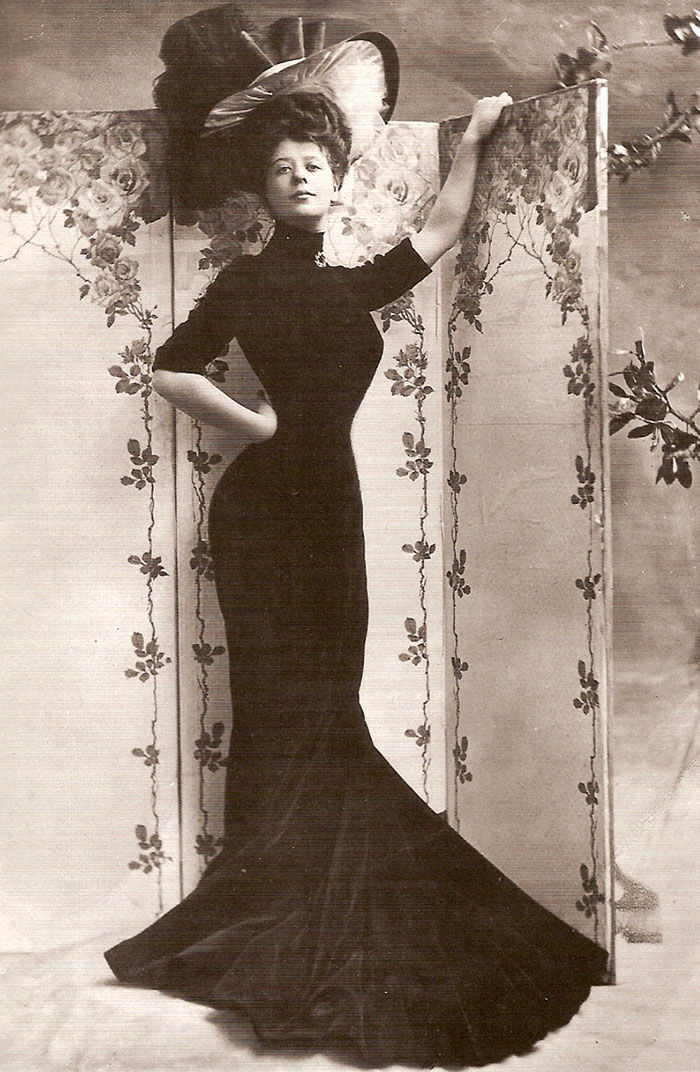
In 1910, a woman’s wardrobe was a carefully maintained illusion. Corsets curved the body into an idealized silhouette, skirts skimmed the ground, and hats rose high with feathers and ribbons, signaling not comfort but conformity. Dressing was ritualistic. Wealthy women could change clothes as many as five times a day, each outfit aligned with a precise social expectation. Fashion was beautiful, but it was also heavy, restrictive, and deeply symbolic of a woman’s place in society.
Paris, already the undisputed fashion capital of the world, set these rules. From couture salons to illustrated magazines, it dictated how femininity should look, move, and exist. Yet even as Edwardian elegance reached its peak, cracks were beginning to show. The world was modernizing faster than fashion could keep up, and when World War I erupted in 1914, those cracks split wide open.
What followed was not simply a change in style, but a complete redefinition of what women’s clothing was allowed to be.
Before the war, women were dressed to be seen, not to act. Garments were made from heavy wools and structured silks, often dyed in subdued tones. Pockets were nearly nonexistent. Movement was secondary to appearance. Clothing assumed a life of leisure, domesticity, and dependence. But as men left for the front, women stepped into factories, offices, farms, and hospitals. Their bodies were suddenly required to work, to move quickly, to endure long hours. Fashion could no longer afford to be ornamental alone.

Almost immediately, the silhouette began to shift. Corsets loosened and then disappeared, replaced by early bras that allowed breathing and mobility. Skirts rose to mid-calf, not as scandal, but as necessity. The long-standing tradition of multiple daily outfit changes collapsed under the weight of reality. Women needed clothing that could last an entire day, clothing that acknowledged their labor and their contribution. For the first time, fashion had to answer to women’s lived experience.
Long before the war demanded practicality, however, one designer had already begun challenging the rules. Paul Poiret, often credited with freeing women from the corset, rejected Edwardian structure in favor of drape and fluidity. Inspired by Orientalist aesthetics, Middle Eastern dress, and the vivid spectacle of the Ballets Russes’ 1910 production of Scheherazade, Poiret introduced harem pants, kimono-style coats, and boldly colored tunics. His designs shocked Parisian society, but they also revealed a radical idea: that a woman’s body did not need to be controlled to be elegant. Though theatrical and impractical by wartime standards, Poiret’s work cracked open the door to fashion as liberation.

While Poiret’s designs were bold and performative, Coco Chanel was quietly laying the foundation for modernity. During the war years, she turned to jersey, a fabric previously reserved for men’s underwear. It was soft, flexible, and unpretentious, everything Edwardian fashion was not. Chanel’s garments were understated but revolutionary. They allowed women to move freely, work comfortably, and still feel refined. In a time of loss, rationing, and emotional exhaustion, her aesthetic felt honest.

As war reshaped daily life, it also reshaped the visual language of fashion. Military influence became unmistakable. Women’s clothing adopted structured jackets, belted waists, brass buttons, epaulettes, and khaki tones, borrowing authority and function from uniforms. The most enduring symbol of this crossover was the trench coat. Originally designed by Thomas Burberry for British soldiers using waterproof gabardine, it was built for endurance, protection, and movement. After the war, women embraced it as everyday wear, transforming a military garment into a timeless fashion staple.
Scarcity drove innovation. With many French wool mills inaccessible due to German occupation and dye supplies limited, designers turned to alternatives such as silk, rayon, viscose, and jersey. Artificial fibers became more common, reshaping the future of textile production. Fashion adapted not through excess, but through ingenuity.

The changes extended beyond clothing. As hemlines rose and arms were exposed, grooming standards evolved. Gillette introduced the Milady Décolleté razor, marketing body hair removal directly to women for the first time. Maybelline popularized mascara during the war years, and lipstick in portable tubes allowed women to carry beauty with them into public life.

Makeup was no longer confined to evening or private spaces; it became part of a woman’s daily presence in the world.
Jewelry, too, reflected wartime reality. Precious metals were scarce, so designers turned to wood, glass, enamel, and aluminum, creating pieces that were inventive rather than indulgent. These accessories carried meaning, often subtle, sometimes patriotic, always resourceful.
When the war ended in 1918, women were expected to return quietly to their former roles. Their wardrobes told a different story. The postwar silhouette was smoother, straighter, and lighter. Waistlines dropped, skirts rose just below the knee, and hair was cut short. These changes were not simply fashionable; they were symbolic. Women had proven their usefulness, their resilience, and their worth. They were unwilling to dress as though none of it had happened.

Designers responded accordingly. Chanel rose to prominence as the face of modern femininity, while Jeanne Lanvin offered romantic alternatives through her robe de style. Poiret’s dramatic excess fell out of favor, outpaced by a world that valued simplicity and movement over spectacle.
By the early 1920s, the transformation reached its most visible form: the flapper. Shorter skirts, dropped waists, bobbed hair, and bold makeup defined a generation that had come of age through war. What began as adaptation became expression. Fashion no longer asked women to be still, silent, or decorative. It allowed them to exist fully.
Women’s fashion during World War I did more than change silhouettes. It reflected a profound shift in identity. Clothing became lighter because women needed to move. It became simpler because life demanded honesty. It became modern because women had stepped into the world and refused to disappear again. From corsets to flappers, the decade between 1910 and 1920 stands as one of the most important turning points in fashion history, not because trends changed, but because women did.


It's astounding how wars have impacts over so many areas in our lives and how it changes us as person, our lifestyles, etc. That even after more than 100 years we're still embracing the changes in silhouettes